
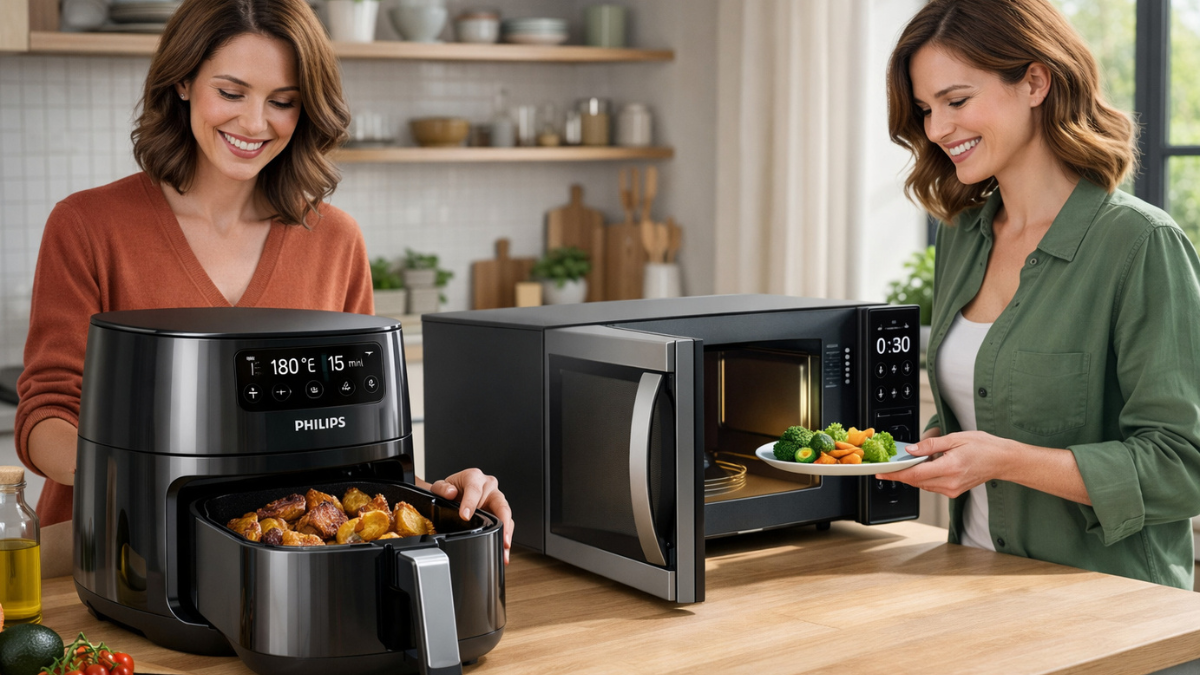
A Game-Changing Kitchen Innovation: For decades, the microwave has been a staple in kitchens around the world. From reheating leftovers to quickly preparing meals, it revolutionized the way people cook and eat. However, a new generation of kitchen technology is beginning to challenge its dominance.
According to culinary experts and appliance engineers, a modern cooking device—often referred to as an advanced multi-function air fryer oven—may soon replace the traditional microwave in many households. After extensive testing, specialists claim that this new appliance is not only more energy-efficient but also produces better cooking results.
Unlike microwaves, which rely on electromagnetic waves to heat food quickly, this emerging technology uses rapid hot-air circulation and precision temperature control to cook meals evenly and efficiently.
As more consumers search for healthier cooking methods and energy-saving appliances, this new kitchen device is gaining significant attention.
Why the Microwave Has Dominated Kitchens for Decades
Before exploring the new technology, it’s important to understand why microwaves became so popular in the first place.
The microwave oven became a household essential because it offered:
- Extremely fast cooking times
- Simple operation
- Convenient reheating
- Affordable pricing
The technology works by generating microwaves that cause water molecules inside food to vibrate, producing heat.
However, despite its convenience, the microwave has several limitations:
- Food often heats unevenly
- Textures can become soggy
- Some dishes lose flavor and crispness
These drawbacks have led both chefs and appliance designers to search for alternatives that provide better cooking performance.
The Rise of the Air Fryer Oven

The device most frequently cited as a microwave replacement is the air fryer oven, an appliance that combines the functions of several kitchen tools into one.
Many models can perform multiple tasks such as:
- Air frying
- Baking
- Roasting
- Toasting
- Reheating food
Unlike microwaves, air fryer ovens use high-speed convection technology to circulate hot air around food. This creates a crispy outer layer while keeping the inside moist.
The result is a cooking process that resembles traditional oven roasting but happens much faster.
How the Technology Works
Air fryer ovens rely on powerful heating elements and a fan that rapidly circulates hot air throughout the cooking chamber.
This process creates a convection effect, which allows food to cook more evenly.
Key features typically include:
- Adjustable temperature controls
- Multiple cooking modes
- Digital timers
- Pre-programmed settings for different foods
Because heat is distributed evenly, meals often cook more consistently compared to microwave heating.
Why Experts Say It’s More Efficient
According to appliance testing laboratories, modern air fryer ovens can be more energy-efficient than conventional ovens and sometimes even microwaves, depending on the type of food being prepared.
Several factors contribute to this efficiency:
Faster Cooking Times
Although microwaves heat food quickly, they often require additional steps to achieve proper texture. Air fryer ovens can complete cooking and crisping in a single step.
Lower Energy Use
Because air fryer ovens heat a smaller chamber compared to traditional ovens, they often consume less electricity overall.
Versatility
Instead of using multiple appliances, one device can perform several cooking tasks, reducing overall energy consumption in the kitchen.
Better Texture and Flavor

One of the biggest advantages cited by chefs and food enthusiasts is the improvement in food texture and flavor.
Microwaves heat food by exciting water molecules, which can sometimes leave meals:
- Soft
- Rubbery
- Unevenly heated
Air fryer ovens, on the other hand, cook food using circulating hot air that produces:
- Crispy surfaces
- Even browning
- Better moisture balance
This makes them particularly effective for foods such as fries, chicken, vegetables, and baked dishes.
Health Benefits of Air Fryer Cooking
Another major reason for the growing popularity of air fryer ovens is their ability to cook food using significantly less oil.
Traditional frying methods require large amounts of oil, which adds calories and fat.
Air fryers use only a small amount—or sometimes none at all—while still producing a crispy texture.
This can help people:
- Reduce fat intake
- Prepare healthier meals
- Maintain balanced diets
For many households focused on wellness and nutrition, this feature is a major advantage.
Why Consumers Are Switching
The shift away from microwaves is being driven by several consumer trends.
Modern households increasingly prioritize:
- Healthy cooking
- Multi-functional appliances
- Energy efficiency
- Better food quality
Air fryer ovens meet these demands by combining convenience with improved cooking performance.
In addition, social media and cooking shows have helped popularize recipes specifically designed for air fryers.
Limitations Compared to Microwaves
Despite their advantages, air fryer ovens are not perfect replacements in every situation.
Microwaves still have some benefits:
- Instant reheating of liquids
- Quick defrosting
- Extremely fast heating for small portions
Air fryer ovens may take slightly longer to preheat and cook certain foods.
For this reason, some households choose to keep both appliances rather than replacing one completely.
The Evolution of Smart Kitchen Appliances
The rise of air fryer ovens reflects a broader trend toward smart kitchen technology.
Many new models now include:
- Touchscreen displays
- Wi-Fi connectivity
- Smartphone app control
- Automatic cooking programs
These features allow users to monitor and control cooking remotely, making meal preparation easier and more precise.
As technology advances, kitchen appliances are becoming more connected and intelligent.
Energy Efficiency and Sustainability
Energy efficiency is becoming increasingly important for consumers seeking to reduce electricity usage and environmental impact.
Air fryer ovens generally require:
- Less preheating time
- Smaller cooking spaces
- Shorter cooking cycles
This can translate into lower energy consumption compared to large ovens.
For households trying to reduce their carbon footprint, this efficiency is another appealing factor.
The Future of Microwave Alternatives
While the microwave remains a convenient tool, the popularity of air fryer ovens suggests that kitchen habits are changing.
Manufacturers are investing heavily in new cooking technologies that combine:
- Speed
- Efficiency
- Better culinary results
Future appliances may integrate multiple cooking methods into a single device, creating even more versatile kitchen solutions.
Should You Replace Your Microwave?
Whether or not to replace a microwave depends largely on cooking habits.
An air fryer oven may be a better choice for people who:
- Enjoy cooking crispy foods
- Want healthier frying alternatives
- Prefer multi-functional appliances
However, those who frequently heat beverages or quickly warm small meals may still find microwaves convenient.
Many experts recommend evaluating daily cooking needs before deciding which appliance best suits a household.
The Growing Popularity of Multi-Function Appliances
The trend toward replacing single-use appliances with multi-functional devices is reshaping modern kitchens.
Consumers increasingly prefer appliances that can perform several tasks at once.
Air fryer ovens exemplify this shift by combining:
- Frying
- Baking
- Roasting
- Reheating
This versatility makes them a valuable addition to compact kitchens where space is limited.
Conclusion
The microwave oven has been a kitchen staple for generations, offering unmatched convenience for quick meals and reheating.
However, the rise of air fryer ovens and other advanced cooking technologies is beginning to challenge its long-standing dominance.
With improved energy efficiency, healthier cooking methods, and superior food texture, these new devices are attracting growing attention from both experts and consumers.
While microwaves are unlikely to disappear entirely, the future of kitchen appliances may increasingly revolve around multi-functional devices that combine speed, efficiency, and better culinary performance.
For many households, the next evolution in cooking technology may already be sitting on the kitchen counter.
FAQs
What device is being suggested as a microwave replacement?
Air fryer ovens and multi-function convection appliances are being considered potential alternatives because they offer more cooking versatility and better food texture.
Are air fryer ovens more energy-efficient than microwaves?
In some cases, yes. Their smaller cooking chamber and faster cooking cycles can reduce energy use compared to traditional ovens.
Do air fryers cook food faster than microwaves?
Microwaves usually heat food faster, but air fryer ovens often provide better texture and flavor.